Category Archives: Christian Theology

Theological thoughts written for interested non experts

“I Don’t Want to Live On The Moon” (I’m Talking to Myself, But You Can Listen, If You Like)

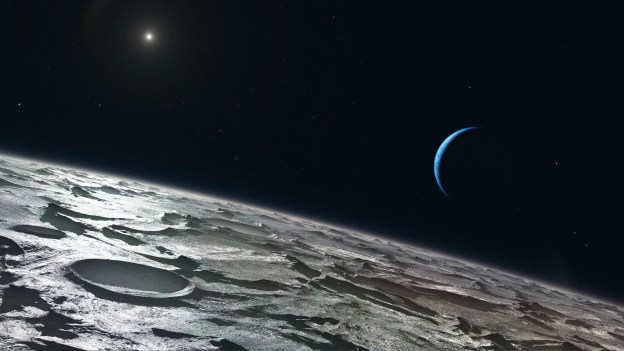
When our two sons were small we’d watch Sesame Street with them almost every day. My favorite song from Sesame Street is “I Don’t Want to Live On The Moon,” written by Jeff Moss in 1978. Ernie sits on a crescent Moon and sings,

“Though I’d like to look down at the Earth from above,

I would miss all the places and people I love,

So although I might like it for one afternoon,

I don’t want to live on the moon.”

When I hear the song today I think first, wistfully, of those little blond-haired boys I used hold in my lap. (You can listen to it on YouTube. It has a haunting, wistful, nostalgic sound.) But I also think about my own ambivalence about public life, about being intimately involved in an institution of higher education and a local church. When I was in graduate school I read a three-volume work on the history of preaching. As I read the story of Gregory of Nazianzus, I thought, “That’s me!” Gregory wanted nothing more than to study, write, think, pray, and lead a quiet life. But the politically astute Basil of Caesarea manipulated him into becoming bishop of Nazianzus. Gregory was enlisted by Basil to engage in the most significant doctrinal battle in all of church history, the Arian controversy. And Gregory’s writings, especially his Five Theological Orations, are considered some of the finest theological writings of all time. Gregory was elected Patriarch of Constantinople and presided over the First Council of Constantinople, from which came the ecumenical Nicene Creed (381). But during the Council, the political maneuvering, conniving, and ambition became so rank in Gregory’s nostrils that he resigned in disgust and retreated into the countryside to write poetry for the rest of his life.

Like Gregory, I hate crowds, church politics, college politics, local politics, county politics, state politics, and national politics. I can’t stand any of it. I don’t want power over anyone. I want to think about my faith, seek truth, write down my thoughts, and be alone with myself and God. I identify with Kierkegaard and even Nietzsche, neither of whom fit into their age and wrote for only a few individuals or for those not yet born. Kierkegaard wrote for “the individual” and Nietzsche wrote for “my reader.” Sometimes, I feel like an alien or a resurrected member of an extinct species when interacting with institutions of modern culture. American churches have become more like businesses than communities created by the Spirit. Being a clergyman or clergywoman in an American church is a position for which one can be ambitious for reasons having nothing to do with a divine call. It takes lots of employees and volunteers just to keep the books, write the checks, and put on a “service” in the average church. And because they are businesses, own property, and wish to have non-profit tax status, they become as enmeshed with and subservient to the government as the Constantinian church that Gregory abandoned, the Danish church Kierkegaard attacked, and the German church Nietzsche scorned. None of it is necessary, of course—money, clergy, property or government entanglement. Perhaps these things are even detrimental to real Christian community. And Christian educational institutions are even more bound by government regulations and accrediting agencies’ views of morality and the purpose of education.

And when I am at my wits end in frustration with these things, I say to my wife, “I want to live on the moon! Let them have it, let them have it all. I don’t want it.” But I never actually do it, because,

“I would miss all the places and people I love,

So although I might like it for one afternoon,

I don’t want to live on the moon.”

Sometimes I think to myself “why do I write and teach and blog? No one cares, no one reads it, or, if they do read it, no one understands. Or, if they understand, they will soon forget.” And the words of Ecclesiastes come to mind (1:2-3; 11):

“Meaningless! Meaningless!”     says the Teacher.

“Utterly meaningless!     Everything is meaningless.”

What do people gain from all their labors

at which they toil under the sun?

11No one remembers the former generations,

and even those yet to come will not be remembered

by those who follow them.

But then I think about the people and books that have influenced me, many of whom died long ago. Where would I be if they had gone to “live on the Moon”? I am very glad Gregory wrote the Five Theological Orations before he left for the country. I am so thankful that Thomas Aquinas, Pascal, Kierkegaard, Karl Barth, C.S. Lewis and so many others cared enough to work so hard and love so much for people not yet born. To keep writing and teaching and putting up with various types of politics, I have to keep thinking about the “individual” that might be helped or “my reader” who might remember and not forget.

And to you “my reader” I say this: we must not allow our inability to see all the fruit of our labor to discourage us from faithfully carrying out the assignment we have been given. And as hard as it is for me to be satisfied with it, this is the true measure of success—that we are doing the task we have been given to do. We must release our labor into God’s hands to do with as he wishes. It will enough to hear the Lord say, “You have done well the work I gave you to do.”

Yes, sometimes I want to live on the Moon, but…

“I would miss all the places and people I love,

So although I might like it for one afternoon,

I don’t want to live on the moon.”

And I would be abandoning my post before God gives me leave.

“From Everlasting to Everlasting You Are God!”

Christianity teaches that God’s greatness is beyond expression in human words. Search creation for great creatures, survey the thesaurus of human language, and strain the imagination to the limit and you will not find an adequate rendering or a fitting analogy for God’s infinite perfection. God possesses the perfection of all creatures combined, and more. But the Lord of all suffers none of creation’s imperfection. God does not live his life divided by time and space. The past is not dim, nor the present spread out in space, nor the future dark. God is light, and his presence illuminates all creatures great and small.

Hence the language of Christian worship and theology combines two types of expression about God. The first affirms God’s possession of all the perfection found in creatures: the glory of the heavens, the power of the storm, the light of human reason, the best of human love, the stability of the mountains, the tenderness of a good mother, the protection of good father; indeed every creature bears some likeness to its Creator. For God made all things good! However, since no creature possesses any good quality to the same degree and in the same way that God possesses it, Christian worship and theology also use the language of negation. We say that God is like but also unlike a rock. God lives like living creatures but also unlike living creatures. We use words like “beyond” or “transcendent” or “surpassing” or “excelling” or “super” to say that God is greater than anything we can experience or image. And we use negative prefixes (in, im, un, a) to negate qualities we consider imperfect.

Time, movement, and change; appearing, growth, and death. These are qualities all creatures possess, and they have positive as well as negative aspects. Apart from time we would not exist, and no one wants to “run out of time.” For us, time and being go together. But living in time means that the past is gone, the present is fleeting, and the future is uncertain. Movement and change can mean advance and improvement. But they can also bring decline and death. As I said above, God possess the perfection of all creatures and none of the imperfections. God possesses being, which is associated with time, but God does not suffer separation, decline, or death. The language of worship exclaims,

“Before the mountains were born

or you brought forth the whole world,

from everlasting to everlasting you are God.

You turn people back to dust, saying, “Return to dust, you mortals.”

A thousand years in your sight are like a day that has just gone by,

or like a watch in the night.” (Ps 90:2-4).

And God’s uniqueness is lauded in these words from 1 Timothy:

“God, the blessed and only Ruler, the King of kings and Lord of lords, 16 who alone is immortal and who lives in unapproachable light, whom no one has seen or can see. To him be honor and might forever. Amen” 1Timothy 6:15-16).

God lives and reigns “from everlasting to everlasting”! This biblical expression emphasizes God’s immortality, his complete immunity from needing to come into being or the possibility of dying. Unlike creatures, God does not depend on any other power for his life. To the contrary, all other powers depend on him for their existence. God is his being and life. Or we could say, God is being and life itself. To generalize the biblical claim that God lives “from everlasting to everlasting,” we can say that God does not suffer any of the negative aspects of time that afflict creatures but possesses and surpasses all the positive aspects of time that bless creatures. So, to gain a deeper understanding of God’s everlastingness we need to remove from our conception of God’s life all the negative aspects of time but leave the positive aspects and surpass them.

And this has already been done by the church fathers and summed up by the Latin Christian writer Boethius. He articulated a definition of God’s eternity that almost all theologians accept until this day. (Some do not accept it, and I will deal with them in another post.) Before I quote Boethius, however, I will quote a passage from Paul that speaks of God as eternal:

“Now to him who is able to establish you in accordance with my gospel, the message I proclaim about Jesus Christ, in keeping with the revelation of the mystery hidden for long ages past, 26 but now revealed and made known through the prophetic writings by the command of the eternal God, so that all the Gentiles might come to the obedience that comes from faith— 27 to the only wise God be glory forever through Jesus Christ! Amen” (Romans 16:25-27).

In verse 26, Paul speaks of God as “the eternal God.” He uses a Greek word that could be translated “the ages” or “a long time.” In fact, in verse 25 the same Greek word is translated “ages.” Paul and the rest of the New Testament writers use this term (Greek aionios) when speaking of “eternal life” to mean unending life or immortality. When used of God it is probably not meant in the Platonic sense of timelessness but in the Old Testament sense of “everlasting to everlasting.” With that said, I shall quote Boethius:

“The common opinion, according to all men living, is that God is eternal. Let us therefore consider what is eternity… Eternity is the simultaneous and complete possession of infinite life. This will appear more clearly if we compare it with temporal things. All that lives under the conditions of time moves through the present from the past to the future; there is nothing set in time which can at one moment grasp the whole space of its lifetime. It cannot yet comprehend tomorrow; yesterday it has already lost. And in this life of today your life is no more than a changing, passing moment…What we should rightly call eternal is that which grasps and possesses wholly and simultaneously the fullness of unending life, which asks naught of the future, and has lost naught of the fleeting past; and such an existence must be ever present in itself to control and aid itself, and also must keep present with itself the infinity of changing time” (The Consolation of Philosophy).

Admittedly, neither the Old nor the New Testament articulates God’s relationship to time in this philosophical way. They do not define eternity as the “simultaneous and complete possession of infinite life.” But the early church saw this definition implicit in the way the Bible speaks about God’s immortality and everlastingness. Boethius carries out the project of affirming the positive qualities of time but removing the imperfections, which is certainly what the Biblical writers intend to affirm. In this sense Boethius merely restates the biblical affirmation that God is everlasting in a way that avoids misunderstanding it to imply everlasting change, growth, and dependence.

Hence, when in worship we affirm God’s everlastingness or eternity we can put our whole souls into our praise because we know that we are attributing to God all the perfections of temporal creatures and none of the defects. We can rejoice that the immortal God is fully capable of enabling us to share in his eternal life because he is completely free from time’s power! Time wears us down, and our fleeting lives come to an end. But God is as much the Lord of time as he is the Lord of everything else! With our brother Paul can joyfully exclaim, “to the only wise God be glory forever through Jesus Christ! Amen.”

“I believe in God the Father Almighty, Maker of heaven and earth”

It might seem obvious, but I think it is worth our time to note that Christianity teaches that God really exists. It does not present evidence or offer proofs for God’s existence because it rarely contemplates the possibility of atheism. The existence of a supernatural realm was self-evident to most ancient people, and atheism was rare. Psalm 53:1 is a possible exception: “The fool says in his heart, “There is no God.” And perhaps the writer of Hebrews had atheism in mind when he said, “And without faith it is impossible to please God, because anyone who comes to him must believe that he exists and that he rewards those who earnestly seek him” (11:6). Overwhelmingly, however, the issue for both the Old and New Testament is not the existence of a god but question of the true nature and identity of God. Isaiah asserts,

I look but there is no one—     no one among the gods to give counsel,     no one to give answer when I ask them. 29 See, they are all false!     Their deeds amount to nothing;     their images are but wind and confusion (Isaiah 41:28-29).

John speaks of the true God as the one we have come to know through Jesus:

20 We know also that the Son of God has come and has given us understanding, so that we may know him who is true. And we are in him who is true by being in his Son Jesus Christ. He is the true God and eternal life. 21 Dear children, keep yourselves from idols.

Paul opposes the idols and gods of Corinth to the one God who is the Father:

We know that “An idol is nothing at all in the world” and that “There is no God but one.” For even if there are so-called gods, whether in heaven or on earth (as indeed there are many “gods” and many “lords”), yet for us there is but one God, the Father, from whom all things came and for whom we live; and there is but one Lord, Jesus Christ, through whom all things came and through whom we live. (1 Corinthians 8:4-6).

The first affirmation of the Apostles Creed asserts, “I believe in God the Father Almighty, Maker of heaven and earth.” In the Creed, God is identified as “the Father Almighty” and as the Creator. The expression “the Father” is short for “the Father of our Lord Jesus Christ.” Interestingly, in his speech to the Athenians Paul also used this brief two-fold way of identifying the God of Christians. He asserted that “The God who made the world and everything in it is the Lord of heaven and earth” (Acts 17:24), and then he drew two inferences from that truth, which he assumes his audience also accepted. (1) God does not need to live in temples made by human hands or to be served by human beings because he made everything and gives “life and breath and everything else” to us (17:24-25). God is self-sufficient and needs nothing! Any concept of God that assumes or implies God’s dependence on creation or any lack in God is severely defective. (2) Since human beings are the image of God, the Creator in whose image we are made cannot and ought not to be reduced to an idol of gold or silver. If we are alive, free, aware, and active, how much more our Creator! Paul reasons here from the widely held belief that the God is the creator of our world to a concept of God worthy of God’s great work of creation.

Next he speaks of the revelation of God’s character and power in Jesus Christ and of his resurrection from the dead:

30 In the past God overlooked such ignorance, but now he commands all people everywhere to repent. 31 For he has set a day when he will judge the world with justice by the man he has appointed. He has given proof of this to everyone by raising him from the dead” (Acts 17:30-31).

Paul names and specifies the Creator by his connection to Jesus Christ. Christ will be the Judge and standard by which God judges the world. I will return to this way of identifying God in future posts. For now I want to extend Paul’s reasoning to other divine qualities that are implicit in the belief that God is “the Maker of heaven and earth.”

In the Bible and in Christian history, creation is the chief example of God’s power. Traditional theology speaks of God’s “omnipotence” because consistency with our confession of God as Creator demands it. The power God demonstrated in creation is not like the power of the Sun, human technology or political organization or any other power within creation. God created the world from nothing. In creating, God gives creatures their total being and existence. No creature can do that. The reason God’s power is called “omnipotence” is that all other powers owe their being and power to God; apart from God they can do nothing.

If God is the creator of “heaven and earth”, that is, of everything, then God has to be everywhere and know everything. God is the cause of all existence, and existing creatures are the effects of God’s causality. And where the effect is, the cause must also be. Hence the Creator must be omnipresent. But the Creator must also be omniscient, that is, God must know all things. God certainly knows what he is and does. And there is no creature that is not the result of God’s doing. Hence God knows all creatures in their total being and doing.

You can see why in his discussion of the Creator Paul quoted the pagan philosopher Epimenides approvingly:For in him we live and move and have our being” (Acts 17:28). The Creator is present and active everywhere. God surrounds, indwells, sustains and empowers us. God provides everything we need. Hence we ought to “seek him and perhaps reach out for him and find him” (Acts 17:27).

“I believe in God the Father Almighty, Maker of heaven and earth.” What an amazing confession! How it would revolutionize our lives if we really understood it and lived by it. We are surrounded, indwelt, enfolded, sustained and empowered by the Almighty Father of our Lord Jesus Christ!

Can God Fail? Six Points of God’s Providence

Theologians speak about God’s action in relation to the world in various ways depending on what aspect they are discussing: creation, providence, reconciliation or redemption. Some writers give the impression that these different aspects are really separate acts each with its own quality and way of acting. In my view, this separation produces many misunderstandings, such as the common idea that after God creates creatures he must change the way he relates to them. In contrast, I consider it very important to understand each of these four aspects as ways to understand the one God-creature relationship. In creation God begins, in providence God continues, in reconciliation God corrects, and in redemption God perfects creation. From beginning to end the same God, Father, Son and Holy Spirit, acts toward creation in view of his eternal plan, the perfection and glorification of creation.

Given my view of the unity of God’s action in creation, you won’t be surprised to learn that I define providence as “that aspect of the God-creation relationship in which God so orders and directs every event in the history of creation that God’s eternal purpose for creation is realized perfectly(The Faithful Creator, pp. 209-210). I see six major points in this definition that need explaining in detail.

(1) “Providence is not a totally separate series of divine acts but an aspect of the one God-creature relationship.” God is eternal, his act of creation is eternal, and his providence is eternal. But the results of that act are temporal. We live our lives in time and experience God’s one eternal act of creation and providence in time. God’s eternity encompasses time but is not limited by time.

(2) Providence is God’s own personal action, not delegated to angels or left to impersonal causes. In Christianity, all God’s actions in relation to creation are understood to be from the Father, through the Son and in the Spirit. God needs no non-divine or quasi-divine mediators in order to be our creator and providential guide. God uses creatures, nature, natural law and human agents. God can work through them, and they are real causes of their effects. But God is not restricted by them in what he can do through and with them. Creatures do not stand between God and the work God accomplishes through them. If God uses a physician to heal or a teacher to inform, God is just as close and just as effective as he would be if worked without them.

(3) God “orders and directs” the history of creation, not leaving creation to chance or fate or misguided freedom. The Faithful Creator explains this point in these words:

“That God “orders and directs” the history of creation means that God brings it about that the created world is and remains the world God intended it to be and that in all worldly events, processes, and free acts God brings it about that his will is achieved… When the Bible affirms God as the creator, it does not mean that God created matter and left it to form a universe by pure chance. Nor does it mean that God created matter and the laws of physics and left them to form a universe by a combination of chance and necessity. It does not mean that God created matter, the laws of physics, and an initial order and let them explore their more constrained but still infinite possibilities by chance. No, when the Bible affirms that God is the creator of heaven and earth it means that God created the order we now experience, the ones that came before and those that will follow until God has created the definitive order in realization of God’s eternal plan. God was, is, and will be the creator of heaven and earth. Hence a robust view of divine creation and a robust view of divine providence stand or fall together.” (The Faithful Creator, pp. 217-218).

(4) Divine providence covers every event in the history of creation, great and small, good and bad, contingent and necessary. God is the creator of everything that has being to any degree. And “events” are the coming to be of new states of creation. God orders and directs—indeed God gives being and sustains—every event no matter how it comes to be. Great and small are relative terms. What seems small at one time may grow in significance with perspective, and what seems great may diminish with time. What seems good in the moment may not work to our ultimate good in the long run, and what seems bad in the moment may be the thing we need to set us on the right path to our ultimate glorification. And what seems to originate exclusively in chance or free human acts can be and will be indwelt, ordered and directed by God according to his plan. God cares about the little stuff, and no power can separate us from his loving care.

(5) God’s eternal purpose guides God’s providential work. God does not need to adjust his plan or improvise in response to unexpected events. Many contemporary writers on providence view God as living in time and responding to events as they occur without being able to anticipate fully what will happen next. I reject this idea as inconsistent with the biblical doctrine of creation and with the promises found in the biblical doctrine of providence. God truly relates to us every moment and in every situation and always responds perfectly. God relates to the temporal creation from eternity, and hence is always ready for whatever happens. For us, the future does not exist at all and God’s act of creation is still ongoing. In our prayers we are relating to the eternal God who is not determined by what we call the future. He can answer our prayers without altering his plan. He knows from eternity what we need and what we should want. Who would want God to give them a lesser good just because they used the wrong words to express their anguish? Every prayer should be accompanied by a sincere “Not my will but yours be done!” You will always receive your request, and it will always be the best answer:

26 In the same way, the Spirit helps us in our weakness. We do not know what we ought to pray for, but the Spirit himself intercedes for us through wordless groans. 27 And he who searches our hearts knows the mind of the Spirit, because the Spirit intercedes for God’s people in accordance with the will of God (Romans 8:26-27).

6) God realizes his aims perfectly. God cannot fail, even in part. We cannot know the details of God’s eternal plan for creation. But how could God fail to accomplish something God intends to do? Doesn’t God know what he can and cannot do? How could God’s plan fail unless God mistakenly thought he could do something but discovered that he was unable? Take comfort. Though we fail often God will not fail:

28 And we know that in all things God works for the good of those who love him, who have been called according to his purpose. 29 For those God foreknew he also predestined to be conformed to the image of his Son, that he might be the firstborn among many brothers and sisters. 30 And those he predestined, he also called; those he called, he also justified; those he justified, he also glorified (Romans 8:28-30).

The Message of Divine Providence for an Age of Anxiety

Anxiety is the state of every soul who thinks the future rests in our hands and that the lasting meaning of our lives will be determined by the worth of our accomplishments. Hence paradoxically, despair is the beginning of hope. And disillusionment is the first step to overcoming anxiety. If we are to experience what Paul calls the “hope that does not disappoint” (Romans 5:5) and the “peace that transcends all understanding” (Philippians 4:7), we must despair of every false hope and every illusory good. Not surprisingly, then, we find in the scriptures some statements that seem intent on driving us to despair. They evoke a kind of therapeutic despair. Working like a strong emetic, they provoke nausea to help us expel the poison of misplaced hope:

“Unless the Lord builds the house, the builders labor in vain. Unless the Lord watches over the city, the guards stand watch in vain” (Psalm 127:1).

“Meaningless! Meaningless!”     says the Teacher. “Utterly meaningless!     Everything is meaningless.”

What do people gain from all their labors     at which they toil under the sun? Generations come and generations go,     but the earth remains forever. The sun rises and the sun sets,     and hurries back to where it rises (Ecclesiastes 1:2-5)

17 And if Christ has not been raised, your faith is futile; you are still in your sins. 18 Then those also who have fallen asleep in Christ are lost. 19 If only for this life we have hope in Christ, we are of all people most to be pitied….32 If I fought wild beasts in Ephesus with no more than human hopes, what have I gained? If the dead are not raised,

“Let us eat and drink,     for tomorrow we die” (1 Corinthians 15:17-32).

To say that Arthur Schopenhauer had a nose for sniffing out false hopes would be an understatement! But he is no more pessimistic than the Preacher of Ecclesiastes when he makes the diagnosis below. He is simply describing what everyone sees if you clear your mind of optimistic theories:

“The vanity of existence is revealed in the whole form existence assumes: in the infiniteness of time and space contrasted with the finiteness of the individual in both; in the fleeting present as the sole form in which actuality exists; in the contingency and relativity of all things; in continual becoming without being; in continual desire without satisfaction; in the continual frustration of striving of which life consists. Time and that perishability of all things existing in time that time itself brings about is simply the form under which the will to live…reveals to itself the vanity of its striving. Time is that by virtue of which everything becomes nothingness in our hands and loses all real value.

That which has been no longer is; it as little exists as does that which has never been. But everything that is in the next moment has been. Thus the most insignificant present has over the most significant past the advantage of actuality, which means that the former bears to the latter the relation of something to nothing” (from Arthur Schopenhauer, “On the Vanity of Existence”).

When you are young the future stretches before you and disappears over the horizon. It does not present itself as a finite series of evanescent moments but as a timeless, motionless whole. And though we know each present moment passes into oblivion before we can taste it, we experience a sense of continuity and stability in our memory of the past and anticipation of the future. This sense of time’s wholeness is reinforced by the appearance that objects around us possess stability, since they endure from one evanescent moment to the next. Youth views the immediate future as a time of becoming and building and the more distant future as a time of being and enjoying the enduring fruits of our labors. But as you get older, you see supposedly “enduring” objects age and disintegrate. Your accomplishments seem less significant in hindsight. The future no longer stretches out infinitely; the horizon continues to recede but the end of your time line appears short of the horizon. The excitement of becoming and the illusion of stable being are replaced by prospect of disintegration and nonbeing. The fragility of the moment spreads itself over all moments making it apparent that the wholeness and motionlessness of time is illusory. Nothing endures. Everything dies. All is forgotten.

I know the temptation of false hopes and the paralyzing anxiety caused by attempting the make my life significant by my labor. Have I done enough? Am I really making a lasting difference in the lives of my students? Will anyone read my books or “like” my blog posts? Will my labor be in vain? Will anyone remember or care? Will it last? Sometimes, when I get in this mood of despair I remember what I have always known and wonder how I could have forgotten: the answers to these questions are completely irrelevant because they are not the right questions to be asking. The right question is this: will my faithful creator take my work and with it accomplish his will and produce something that lasts, not for a day or a hundred or a thousand years, but for eternity? Will my God remember me? The answer I hear resounding in my ears is a clear yes! When I despair completely of my strength and put my hope in God, in God alone, my joy returns. I regain energy for my work. I do not have to see it. I know it, I feel it: My work will not be in vain!

At the end of his great chapter on the resurrection, Paul expresses the hope beyond the despair of human possibilities:

58 Therefore, my dear brothers and sisters, stand firm. Let nothing move you. Always give yourselves fully to the work of the Lord, because you know that your labor in the Lord is not in vain (1 Corinthians 15:58).

The Lord really does built the house and raise the dead!

Divine Joy and Joy Divine: Five Points on Creation

We tend to treat God’s act of creating heaven and earth as an event in the long past, relevant to our lives only as setting the stage for the drama of sin and salvation. But the biblical doctrine of creation is much richer than that. It brims with implications for daily life and for understanding God’s continuing relationship to us in providence and in salvation. The first two chapters of my book The Faithful Creator explore the biblical doctrine of creation, summarizing it in five points. In today’s post I want to state these points and briefly explain them.

(1) The one God is the absolute origin and sovereign ruler over all that is not God. “In the beginning God created the heavens and the earth” (Genesis 1:1). Paul states this truth in unforgettable words: “For from him and through him and to him are all things” (Rom 11:36; cf. 1 Cor 8:6). The two concepts of absolute origin and sovereign ruler go together. Our creations can get away from us and outlive us, but that is because we are not “absolute” origins for the things we make. Nothing escapes the Creator. And that is very good news for those who love the Creator and believe he is good!

(2) The one God freely established the Creator-creature relation, which is characterized by generosity, freedom, and power on the Creator’s side and dependence and debt on the creature’s side. God was, is and always be our Creator. We will always depend on the Creator and will be forever in his debt. For some, this type of relationship seems demeaning, and they wish to forget it or try to escape it. But those who understand that the one on whom we depend is the Father of the Lord Jesus Christ revel in the gracious gifts of our faithful Creator.

(3) The creation really exists before God and stands before him as good; that is, as the result of God’s act of creation, the creature really is what God intended it to be. In the first chapter of Genesis, God pronounced the creation good at almost every point. And the Psalmist exclaimed, ‘The earth is the Lord’s, and everything in it’” (Ps 24:1). And Paul explains, “For everything God created is good, and nothing is to be rejected if it is received with thanksgiving” (1 Tim 4:3-4). That creation is “good” does not mean that it is perfect or that it cannot be misused. Rather it means that each and every creature has a place and a function rooted in the will of the Creator. Christians are not Gnostics or Manicheans who reject the body, food and the human joys of life. The good things of creation may be legitimately used to sustain and enhance human life and bring glory and thanksgiving to God. Only, they must not be worshiped or enjoyed selfishly or greedily. Instead they are meant to provide occasions for shared joys. Jesus did not condemn feasting but he did urge us to invite the poor and the sick that they may share in the joy!

 (4) The Creator-creature relation established at the beginning, with its characteristic qualities, endures for all time. The author of Revelation praises God in these words, “You are worthy, our Lord and God, to receive glory and honor and power, for you created all things, and by your will they were created and have their being” (Revelation 4:11). God sustains his creation through the powerful word of the Son (Hebrews 1:3). Creation is happening now. Every new moment and every new thing comes from the hand of the Creator. What a difference it would make in our sense of God’s presence if we grasped this truth! The world and everything in it, every beat of our hearts, every breeze that cools our brows, and “every good and perfect gift” (James 1:16-17) comes from the heart of our faithful Creator!

 (5) Human beings possess a unique relationship to the Creator characterized by their image and likeness to God and responsibility to him. Human beings are not the whole of God’s creation but they have been given a special role. We have been given the capacity to know and love the Creator, and we have the obligation to image the Creator in the created world. Of course we don’t do a good job of it. In the New Testament we learn that Jesus Christ is the image of God in an archetypical sense: “The Son is the image of the invisible God, the firstborn over all creation” (Col 1:15; cf. 1 Cor 15:49). By living in fellowship with the true image of God in the power of the Spirit we can begin to do what Adam did not, that is, shine with the glory and image of God (Col 3:10; 2 Cor 4:4; Rom 8:9) and spread the divine light over the world. Let there be light!

Creation: The Most Neglected And Underrated Teaching In Contemporary Christianity

I am very excited to announce the publication of my book The Faithful Creator: Affirming Creation and Providence in An Age of Anxiety (InterVarsity Press, 2015). I got my first copies Tuesday, September 15. I have more I want to say about the church, but in view of the arrival of the book, I want to focus on doctrines of creation and providence for the next few weeks.

Christianity affirms that the God we see in the face of Jesus Christ and experience in the power of the Holy Spirit, is the Creator of all things. The first words of the Bible are, “In the beginning God created the heavens and the earth” (Genesis 1:1). Paul reminded the believers in Corinth to be careful to avoid idolatry. There are many “so-called gods and lords” out there in the culture, “yet for us there is but one God, the Father, from whom all things came and for whom we live; and there is but one Lord, Jesus Christ, through whom all things came and through whom we live” (1 Corinthians 8:6:). And the first declaration of the Nicene Creed (381) affirms: “I believe in one God, Almighty; Maker of heaven and earth, and of all things visible and invisible.”

Considering its foundational importance and its comprehensive scope, the Christian doctrine of Creation may be the most neglected and underrated teaching in contemporary Christianity—and the most hated by those outside. In the first paragraph of Chapter 1 of The Faithful Creator, I underline the importance I see in the doctrine of creation:

“Learning how a thing began tells you much about how it will end and the course of its journey. In our experience everything begins from nothing and returns to nothing. From dust to dust, sunrise to sunset, in the end everything returns to its beginning. And if our origin really is nothing, our end will be nothing as well and our story a meaningless tale. But the Bible’s story does not begin with nothing, and it does not end with nothing. It begins and ends with God. And because God is our beginning and end, our journey will not be meaningless, for God surrounds and enfolds our time in his eternity. God alone is our origin and our creature-relationship to God defines our essence, and this makes the study of divine creation supremely relevant to our existence” (p. 25).

Taking creation and the Creator seriously can transform the way you feel about the world around you and your own existence. And taking the faithfulness of the creator seriously by coming to embrace the doctrine of God’s all-embracing providential care, can begin to liberate us from the pervasive anxiety that robs us of the “peace that passes understanding.” These are the reasons I wrote this book.

You can look at the Table of Contents or browse sections or purchase the book at Amazon.com or other online sites:

http://www.amazon.com/Faithful-Creator-Affirming-Creation-Providence/dp/0830840826/ref=sr_1_4?ie=UTF8&qid=1442619010&sr=8-4&keywords=ron+highfield

Next Post to Follow Soon: “Why Contemporary Culture Hates the Christian Doctrine of Creation”

What is the Church? Building, People, Event or What?

“The church is not the building, and the church is not an idea. The church is not merely the clergy. The church is the people!” Perhaps you have heard words to this effect. True, the church is not the building. Employing the word “church” to refer to a house of worship makes sense only because the church meets there; it’s not the primary meaning of the word. The church is not merely an idea but an actual thing. But is the church merely the people?

No, it cannot be merely the people because in that case any gathering of people would be the church. To be the church, the gathered group must at least be people of Christian faith and be gathering for the purpose for which the church meets: praying, hearing Scripture read and expounded and, most centrally, participating in the Lord’s Supper or the Eucharist. Well then, does the church exist only when Christians gather to participate in the Eucharist? No, for then the church would be merely a periodic event the people engage in rather than a reality that encompasses their whole persons all the time. Surely the church exists even when it is not gathered and visible.

How can the church be a reality even when it is not gathered and visible? And why is this important? Most references to the church in the New Testament refer to the Christians in a particular locality whether gathered or not. But the letters to the Ephesians and the Colossians refer to the church as the “body” of Christ (Ephesians 5:23, 30 and Colossians 1:24). Paul speaks of how Christ “feeds and cares” for his body the church like we feed and care for our bodies (Ephesians 5:29). The relationship between Christ and the church is a “profound mystery” (Ephesians 5:32).

Paul speaks of individual Christians as having been “baptized into Christ” (Romans 6:3 and Galatians 3:26). Christians are “in Christ” (Romans 8:1; and many other places) and “have the spirit of Christ” (Romans 8:9). Christ is “in you” (Romans 8:10) and you are “in Christ” (Romans 8:34). Just as a physical body has many parts but is one, “in Christ we, though many, form one body, and each member belongs to all the others” (Romans 12:5). We are “united” with Christ (Philippians 2:1-2). In the Lord’s Supper or Eucharist, we “participate in the body and blood of Christ” (1 Corinthians 10:16).

What, then, is the basis of the existence and the unity of the church even when it is scattered over a city or the whole world or meets under different denominational names? Of course, the answer is Jesus Christ with and in and through the Spirit of God. Everyone who has been baptized into Christ has been united to him. And in him all are united to each other as the church. The church, then, is the people of God gathered together in Christ through the Spirit. They are always together in Christ, but they long for the visible gathering where they can express their faith in Christ and love for each other.

Though the church is always one, holy, catholic and apostolic in Christ, and it exists in full actuality in him, the spirit of Christ drives us together so that we can experience that reality with our eyes and ears and hands. Just as Christ became incarnate in a physical body in Jesus of Nazareth to help us in our weakness, he draws us together to participate in the Eucharist, in prayer and in hymns so that we can touch, taste, and hear him in our time and space. The church is his body, and in it he speaks in audible voice and comforts with physical touch.

So it does not matter how small a church you attend or in what corner of the planet you gather. Christ is there, and where he is, there is also the whole church–the one, holy, catholic and apostolic church. And I too am there with you, my brothers and sisters.

The Politics of Jesus

Did Jesus have political aims? Of a certain kind, yes. Let’s talk about it.

In his book Politics, Aristotle wrote:

“Hence it is evident that the state is a creation of nature, and that man is by nature a political animal. And he who by nature and not by mere accident is without a state, is either above humanity, or below it; he is the ‘Tribeless, lawless, heartless one,’ whom Homer denounces—the outcast who is a lover of war; he may be compared to a bird which flies alone.” (Book 1.2.9).

Human beings are endowed with reason and speech, and these powers cannot be brought into full actuality apart from human community. Human nature is so rich that it cannot be realized fully by one individual, but when many people over centuries contribute their gifts, each individual can enjoy the work of all. The products of reason and speech become common property and enrich everyone. In the first paragraph of Politics, Aristotle made this significant claim: “If all communities aim at some good, the state or political community, which is the highest of all, and which embraces all the rest, aims, and in a greater degree than any other, at the highest good” (1.1.1).

Aristotle grounds the state in human nature. A being that is stateless by nature is either a god or a beast. The political order encompasses all other communities within its sphere. Unlike subordinate communities, it aims “in a greater degree than any other, at the highest good.” A family, a guild or a school will aim at the welfare of its members, a partial good. The state aims at the welfare of everyone, so that everyone may enjoy to the fullest degree the full flowering of human nature.

Let’s compare and contrast Aristotle’s thinking about the political community with the New Testament’s teaching about the church. Surely Aristotle is right that the state is an outgrowth of human nature and that a being stateless by nature is not human in the ordinary sense. The church is a human community, and Aristotle would number it among those subordinate communities that aim in a less comprehensive way at the highest good. But Christianity understands this community to be composed of a “new humanity,” “born again,” a people endowed with the “Spirit of the living God” and having under gone “the transforming of their minds.” They are in Aristotle’s words “above humanity.” A divine power is at work in the church to raise it above normal human life.

Aristotle is also on target when he asserts that every community aims at a good that gives it purpose, unity and identity. However, Aristotle’s “highest good” is limited to this world, this life. Christianity asserts that human beings should aim at a goal higher than the common good of the whole community within this life. God created human beings in the image of God, and human nature, empowered by the grace of the Spirit, can participate in the divine nature and attain eternal life. From Aristotle’s viewpoint, the church’s aim is off target; it aims too high and it demands too much of mere mortals. It is bound to fail.

The New Testament presents the church as the community founded by Jesus Christ. It is indwelt and empowered by the Holy Spirit and directed to God the Father. In analogy to Aristotle’s view of the state, the church is based on the nature of the new humanity and is necessary for the full flowering of this new human being. Christians are not “birds that fly alone,” but they really do fly. The Christian is not only a human being endowed with reason and speech but also someone united with Christ, who dwells in heaven and yet fills the universe. The Christian has received the life-giving Spirit and has been freed from the power of sin and death. Unlike Aristotle’s natural human being, the Christian lives by faith and not by sight.

The church is the community whose threefold purpose is (1) to enable the new powers and virtues that have been given to believing and baptized human beings to come into full use and benefit the whole church and through the church the whole world; (2) to embody as far as possible in the present the perfect community of heaven, the Father, Son and Spirit and the coming Kingdom of God, which is the union of human beings and God in the perfect divine/human fellowship; and (3) to call the whole world to rise up not only beyond the beastly nature of the stateless one, the ‘Tribeless, lawless, heartless one.’ It also calls human beings beyond the best political order human beings can create. She serves the whole human race by calling it to its final destiny and revealing its true dignity.

Hence to normal human beings, Christians will always appear to have their heads in the clouds. Their values are a bit askew. They are always rejoicing but never take pleasure in evil. They are serious about everything but in despair over nothing. The Christian is as courageous as a lion but as gentle as a lamb; they have wills as hard as steel but hearts as soft as wax.

The church will never subordinate itself to the political community because the good it seeks is higher than the good sought by the state. The virtues she promotes—love, faith and hope—are better than those the state values. She seeks heaven while the state grasps at earth. The state is built on violence and coercion, and it seeks wealth, power and worldly security; the church is built on freedom and love and seeks treasure in heaven. The church is the temple of God, the city of God, the body of Christ. The state is human nature writ large, with all its strengths and weaknesses.

For Aristotle, human beings are “political animals” whose destiny is achieved, if at all, only in this life. For Christianity, human beings are more; they are ecclesiastical animals whose destiny lies in eternity, in the divine life.

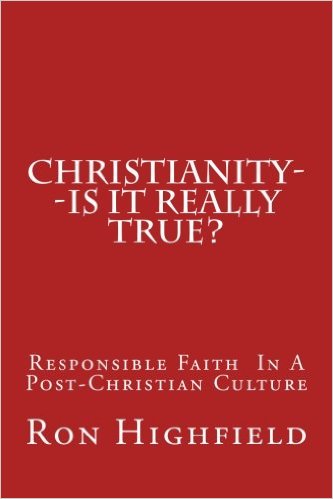
ANNOUNCING the publication of “Christianity–Is It Really True? Responsible Faith In a Post-Christian Culture”

I am excited to announce the publication of the book that includes 48 revised and edited essays from last year’s series “Is Christianity True?”

Perhaps you know an undergraduate or graduate student who could benefit from reading it. Perhaps you want to lead a small group on this theme. Perhaps you simply want a copy for yourself.

If you enjoyed the series I hope you will recommend the book to your friends. I set the price near the minimum allowed by Amazon.com, $8.95.

It is available also in Kindle. $3.49.

Read the PREFACE, which describes the contents and aims of the book:

Preface

This book is second in a series of books I’ve written in weekly installments on my blog ifaqtheology (Infrequently Asked Questions in Theology). It contains in revised form the 48 essays I wrote between August 2014 and July 2015 on the question, “Is Christianity True?” I hope that publishing them in printed form will make them accessible to individuals and groups that want to study the topics of Christian evidences and Christian apologetics. I have long felt that the most popular works on evidences and apologetics don’t quite get it right. As a whole they try to prove too much and do not take adequately into account our fallibility. They underestimate the role of the will in belief. And they too readily accept the burden of proof, which puts the case for Christianity at a decisive disadvantage. They do not take the best logical and rhetorical path from nonbelief to full Christian faith. Specifically and most disturbingly, they attempt to prove the Bible’s authority independently of faith in the resurrection of Jesus Christ from the dead. In this book I develop a different understanding of the path to faith, a different vision of the role of the will in belief and a different way of establishing the authority of the Bible.

Part One sets out the ground rules for Christian evidences. The chapters in this section will clarify the purpose, methods and limits of evidences. We will ask who bears the burden of proof and what conditions must be present before an inquirer can make a reasonable judgment to believe the Christian gospel and a responsible decision to take up the Christian way of life. We define such relevant terms as truth, reality, certainty, knowledge, faith and opinion. Finally, we will map the path from nonbelief through four decision points to full Christian faith.

Part Two takes us through the four decision points we must traverse on our way to full Christian faith. First, we must decide between atheism and belief in God. I argue that this decision depends on our choice between matter and mind as the most fundamental explanation for our world. Is the beginning and end of all things spirit or matter, life or death, intelligible or unintelligible, mind or machine? Having decided that believing in God is the most rational choice, we now confront the second decision point where we ask, “Is the mind that is evident in the intelligible order of the world impersonal or personal?” If we opt for a personal God, a third decision point confronts us with the choice between thinking of God as the highest aspect of nature or as transcendent over nature. Is God supernatural or natural? Is the world God’s creation or God’s body? The issue can also be framed as a decision between theism and panentheism, which is the idea that God is an aspect of the world neither wholly different from world nor fully identical to it. If we accept theism as the best answer to this third question, we come to the fourth decision point at which we must decide whether to remain mere theists or move into full Christian faith. At this crossroads we are required to discuss the possibility and actuality of a revelation of God in history. At the moment of decision we must assess the evidence for the bodily resurrection of Jesus Christ from the dead and reflect on the meaning of this event for the nature, identity and significance of Jesus.

Part Three marks the transition into a new phase of the argument for Christianity’s truth. The previous chapters presented an affirmative case for making a reasonable judgment for Christianity’s truth and a responsible decision to become a Christian. But now we must deal with some misunderstandings and objections to Christianity. The positive side of the argument is often called “Christian Evidences” and the defensive side is often called “Christian Apologetics” or “Defense of Christianity.” The necessity of the defensive phase of the argument rests first on the propensity of people to misunderstand what Christianity actually is and what it really teaches. How can we make a reasonable judgment or a responsible decision about Christianity unless we possess an accurate understanding of its teachings? Some people find certain versions of Christianity incredible or morally offensive or insufferably superficial, and hence hesitate to accept them. Others adopt a form of Christianity that is defective when compared to the original form taught by Jesus and the apostles. It is questionable whether one has really made an authentic decision about Christianity if the form they know is not the real thing.

The second reason for the pursuing the defensive phase of the argument arises from the barrage of objections that nonbelievers hurl against Christianity. Some raise objections to the existence of God, theism or divine revelation. They raise the problem of evil or assert that the world needs no explanation beyond itself. Others object to the moral teachings of the Bible or deny its historical accuracy. Some offer objections to the reliability of the apostolic witnesses to the resurrection of Jesus or object to the very possibility of miracles. The list is endless. And even if one thinks the case I made in the first phase of the argument is very strong, one may still be disturbed and caused to doubt by the many objections that are raised. Hence I want to reply to some of the most potent objections. Some of these objections may turn out to be based on misunderstandings of Christianity. But some may accurately represent Christianity and yet still suggest reasons to doubt or reject it.

How to Read This Book

I wrote this book as a sustained and step-by-step argument, and reading it from beginning to end may be the best way to get the most from it. But I think there are several points at which readers could enter the argument without getting lost. If you are not interested right away in the question of methods in apologetics, you could skip Part One and move directly to Part Two, which develops the four decision points on the way to full Christian faith. And even within Part Two, you could read the chapters on the fourth decision point, which focuses on the resurrection of Jesus Christ, without reading the first three. Or, you could begin with Part Three, which deals with objections to Christian faith. No matter where you begin, I hope you will read the whole book so that you can see the big picture argument.